If you are searching for a Lovable alternative, here is the honest split before you read another listicle: if you want another full-app generator, look at Bolt or v0; if you already have a codebase and want focused UI design that hands back real React on flat pricing, the answer is a design agent, Superdesign. Lovable's job is to generate a whole running app (frontend, backend, auth, database, deploy) from a prompt, and it is genuinely great at that for non-technical founders. But most people search "lovable alternative" for one of four reasons: credits vanish in debugging loops, it is greenfield-only so it cannot work inside an existing repo, it stalls around 70 to 80 percent and you export to finish elsewhere, and the 2025 to 2026 security incidents shook trust in code you do not fully control.
If any of those is you, you probably do not need a different app generator. You need a design agent: one that lets you explore many directions at once, pulls from a huge free prompt library so you are not starting from a blank box, and gives you real UI code you own without watching a credit meter. That is Superdesign, and this page makes the honest case for it while being fair to Lovable, Bolt, v0, and Cursor.

What is the best alternative to Lovable?
The best Lovable alternative depends on what you are actually trying to do. If you want another way to generate a full-stack app fast, look at Bolt (bolt.new) or v0 (v0.app). If you want production-grade control and to finish the job in your IDE, Cursor (cursor.com) is the common destination. But if you already have a codebase and you just need focused UI design that hands back real React and Tailwind code, Superdesign is the under-served pick. It is a design layer, not an app builder, and that is the point.
Here is the thesis in one line: if you want a whole generated app, Lovable or Bolt. If you want a design agent that reads your codebase and gives you real, ownable UI code without the credit roulette, that is Superdesign.
Why Superdesign beats Lovable on exploration and cost
The two things that send people away from Lovable, the credit meter and the linear one-thread workflow, are exactly the two things Superdesign flips. Where Lovable charges per action and works one prompt at a time, Superdesign gives you a free community prompt library to start from and parallel exploration so you can chase several directions at once.
Start with the prompt library. It is one of the largest free libraries out there, covering styles, animations, and UI components, and it works with any coding agent. The premise is simple: models output "AI slop" less from lack of capability than lack of context and guidance, so a good starting prompt does most of the heavy lifting. With Lovable, every retry to get a look right spends metered credits. With Superdesign you grab a proven starting point for free and skip the blank-box guessing entirely.
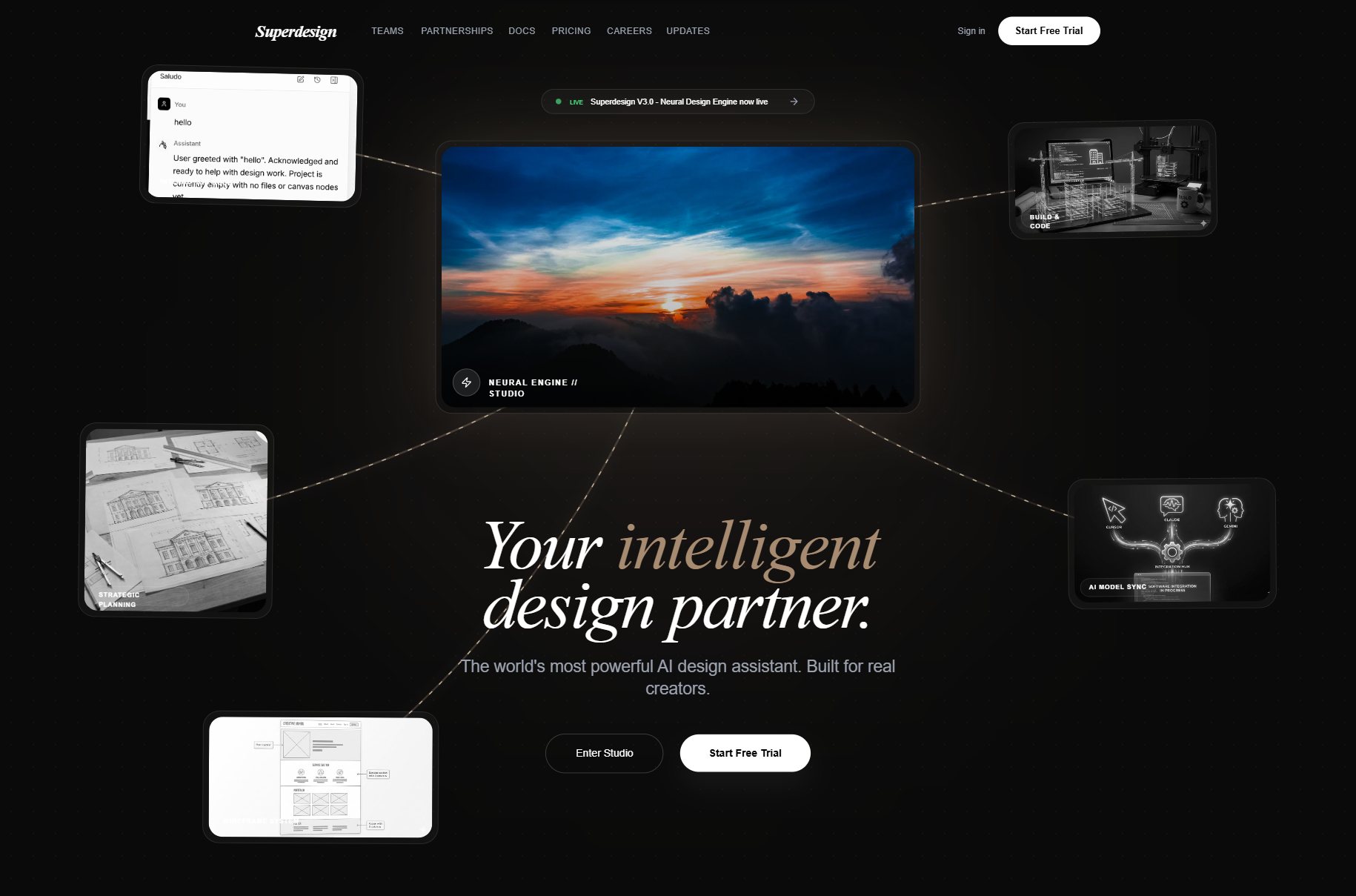
Then there is how you explore. Lovable is a linear chat: one thread, one direction at a time, and you pay for each detour. Superdesign forks multiple design directions in parallel on an infinite canvas, carries context forward across the branches, and can generate whole multi-screen flows rather than one screen per prompt. So you can fan out four directions, throw two away, and converge on the rest, all functional and clickable, without a meter ticking on the dead ends.
A third Lovable gap worth naming: it cannot design on your real product. Superdesign's context-aware agent can point at a live page (your own production UI or any site you like) to extract its styles, colors, and components, so you design on reality instead of regenerating from a blank prompt. Designing on what you already shipped beats reconciling a fresh greenfield app later.
What is Lovable, and why do people look for an alternative?
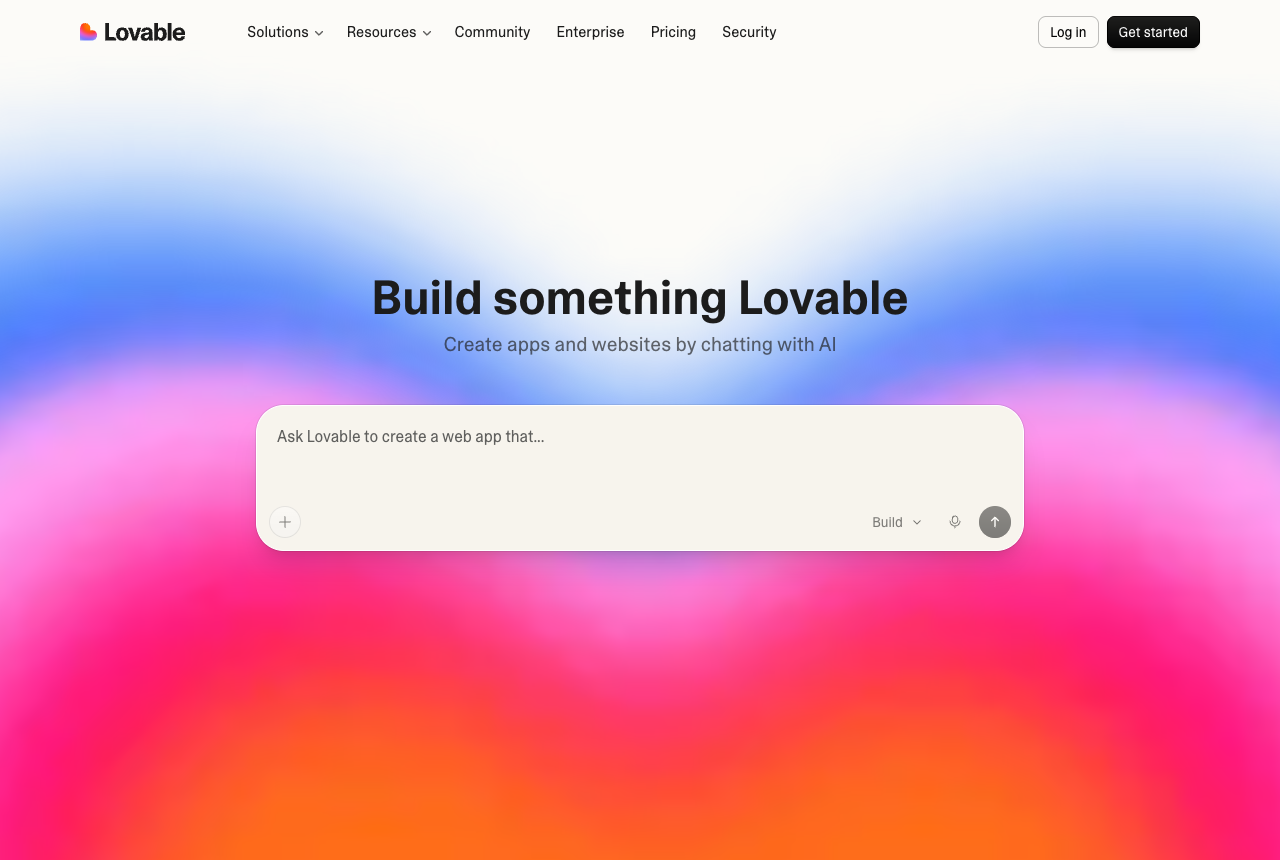
Lovable (lovable.dev) is an AI full-stack app builder. You describe a product in plain English and it generates a React frontend, a Supabase backend, auth, a database schema, and a one-click deploy. For a non-technical founder shipping an MVP, a landing page, or a waitlist app, it is one of the fastest paths from idea to a live URL, often in an hour or two. That speed is real and worth respecting.
People go looking for an alternative when they hit the edges of that model. The loudest, most-sourced complaint is the credit system. A Superblocks review describes it as feeling like a "slot machine," with paid credits draining faster than people expect and users running out before they realize it. Worse, the AI gets stuck in looping debugging cycles that re-introduce old errors while consuming paid credits. And an eesel AI pricing deep-dive documents a hidden dual-layer billing model where buying extra credits raises your ceiling instead of adding a fresh pool, which is where most "more expensive than expected" stories come from.
Can Lovable work inside my existing codebase or GitHub repo?
No. Lovable is greenfield-only, and this is the single biggest reason developers with an existing product search for an alternative. As Builder.io's own alternatives guide notes, you cannot start a Lovable project from an existing GitHub repo, and it only syncs Git changes on the default branch. In practice that means Lovable sits next to your codebase, not inside it. It does not know your components, your design tokens, or your conventions, so anything it generates has to be reconciled with what you already have.
This is exactly the gap Superdesign is built for. Invoked from a coding agent like Claude Code or Cursor, it learns your project first, then designs in that context, so instead of regenerating an app from scratch you get UI that fits the codebase you already maintain. The full "reads your existing codebase and design system" argument lives in the best AI UI generator; the design-system file it builds is the practical analog of a DESIGN.md.
Lovable vs Superdesign: the short version
The fairest framing is app generator versus design agent: Lovable wins on full-stack breadth and going from zero to a deployed product, while Superdesign wins when you already have the product and need the UI layer done well, in code you own, on a flat plan instead of metered credits. They are not like-for-like, so the choice is really about which job you have rather than which tool is "better." We run the full 1:1 (feature by feature, pricing, and workflow) in Lovable vs Superdesign.
The credit angle is the one most people weigh, and it is worth being precise about. Reviewers note that Lovable's debugging loops can consume credits whether or not they actually fix the problem, which turns iteration into anxiety. Superdesign's flat plan removes that: you explore as many directions as you want without watching a meter. The deeper case on credit-burn pricing across the whole category lives in the best AI UI generator.
Do I own the code, and where does it live?
Yes, and this is a real advantage over a hosted app you do not fully control. Superdesign outputs real React, Tailwind, and CSS into your project, so the code lives in your repo, on your infrastructure, under your own RLS rules and secrets. You review it, you commit it, you ship it.
That ownership framing got sharper after a run of reported security issues in Lovable-generated apps. Superblocks documented cases of missing or insufficient Supabase row-level security, where generated apps left tables (things like user lists and payment records) readable without logging in. The Next Web reported a broader account of access-control flaws that exposed data across many projects, and The Register covered vulnerabilities found in apps built with the tool. The common thread in these reports is generated apps shipping with weak access control, so check the linked sources for the current specifics.
To be fair, generated code can be insecure no matter who generates it, and these are issues in apps produced by the tool rather than proof that any specific app is unsafe. But the honest contrast holds: when the code lives in your repo and you control the database and secrets, you are not waiting on someone else's patch timeline.
Lovable vs Cursor: why do people switch after the first prototype?
People switch from Lovable to Cursor because Lovable gets them most of the way and then stalls. The well-documented community pattern, captured in the eesel AI review, is to use Lovable for the first 70 to 80 percent, export to GitHub, and finish in Cursor. The Superblocks review puts the ceiling around 70 percent and notes it falls apart on complex, multi-component apps and is not suited for tight backend control or sensitive and regulated workloads.
That pattern raises a question nobody on the listicles asks: if you are going to finish in your IDE anyway, why not keep design in your IDE from the start? That is exactly what the Superdesign coding-agent skill does. Instead of building in a hosted tool and exporting later, the design work happens in context, in the same place you write code, and hands back clean code you can plan an implementation around. If your honest workflow ends in Cursor, starting there saves you the round trip. We go deeper on this in Cursor for design.
When should you still just use Lovable (or Bolt or v0)?
Stay on Lovable when you genuinely need a whole app generated and you do not have a codebase yet. If you are a non-technical founder and your goal is "working full-stack product as fast as possible," Lovable's all-in-one speed is hard to beat, and switching to a design-only tool would not serve you. Be honest with yourself about which side of the fork you are on.
Reach for the alternatives by the job you actually have:
- You want another full-stack app generator. Try Bolt or v0. Bolt is fast browser-based full-stack generation; v0 is strong at React and shadcn UI. See Bolt vs Superdesign and v0 vs Superdesign.
- You want production control and to finish the job. Cursor is the IDE most people export to. More in Cursor for design.
- You have a codebase and just need the UI designed well, in real code you own. That is Superdesign. It is a design layer, not a full app builder, and naming that honestly is the whole point.
Can AI design UI that matches my existing design system?
Yes, and this is where a codebase-aware design agent pulls ahead of a greenfield app generator. Because Superdesign creates a design-system file from your real project (the practical analog of a DESIGN.md), every generation can respect your existing typography, color, spacing, and component patterns instead of inventing a fresh look each time. That consistency is exactly what greenfield, screen-by-screen generation struggles with.
That consistency pairs with the parallel exploration and free prompt library from the top of this page: you can fork several on-brand directions at once instead of one greenfield guess. If you are still mapping the landscape, the best AI UI generator breaks down the wider field, and the 2026 AI design stack shows where a design agent fits alongside the rest of your tools. If a free prompt-to-mockup tool is on your shortlist, our Google Stitch alternative guide covers why its design-only output stops short of shippable code.
The honest verdict
Lovable and Superdesign are not like-for-like, and pretending otherwise would not help you. Lovable is the fastest way to generate a whole working app from a prompt, and it is the right call for a non-technical founder shipping an MVP. The reasons people leave are real (credit roulette, greenfield-only, the 70 percent ceiling, and a string of security incidents) but they are reasons to pick a different tool for a different job, not proof Lovable is bad at its own job.
If you have a codebase and what you actually need is focused, codebase-aware UI design that hands back real React code you own, on flat pricing, in your IDE, that is the under-served case Superdesign was built for. Try Superdesign free, or browse more head-to-heads on the compare hub.